/ Blog / Powder Coating vs. Anodizing

Powder Coating vs. Anodizing

2026-01-30

When it comes to protecting and adding aesthetics to metal surfaces, two great finishing options are powder coating and anodizing. Both offer excellent protection against corrosion and wear, but they work in different ways and serve completely different purposes.

Understanding the key differences between these processes can help you make the right choice for your project.

Introduction

Powder coating involves electrostatically applying a dry, free-flowing powder to a part, which is then cured in an oven to create a hard, durable finish.

On the other hand, anodizing is an electrochemical process that enhances the metal’s natural oxide surface, providing increased corrosion resistance and a decorative finish.

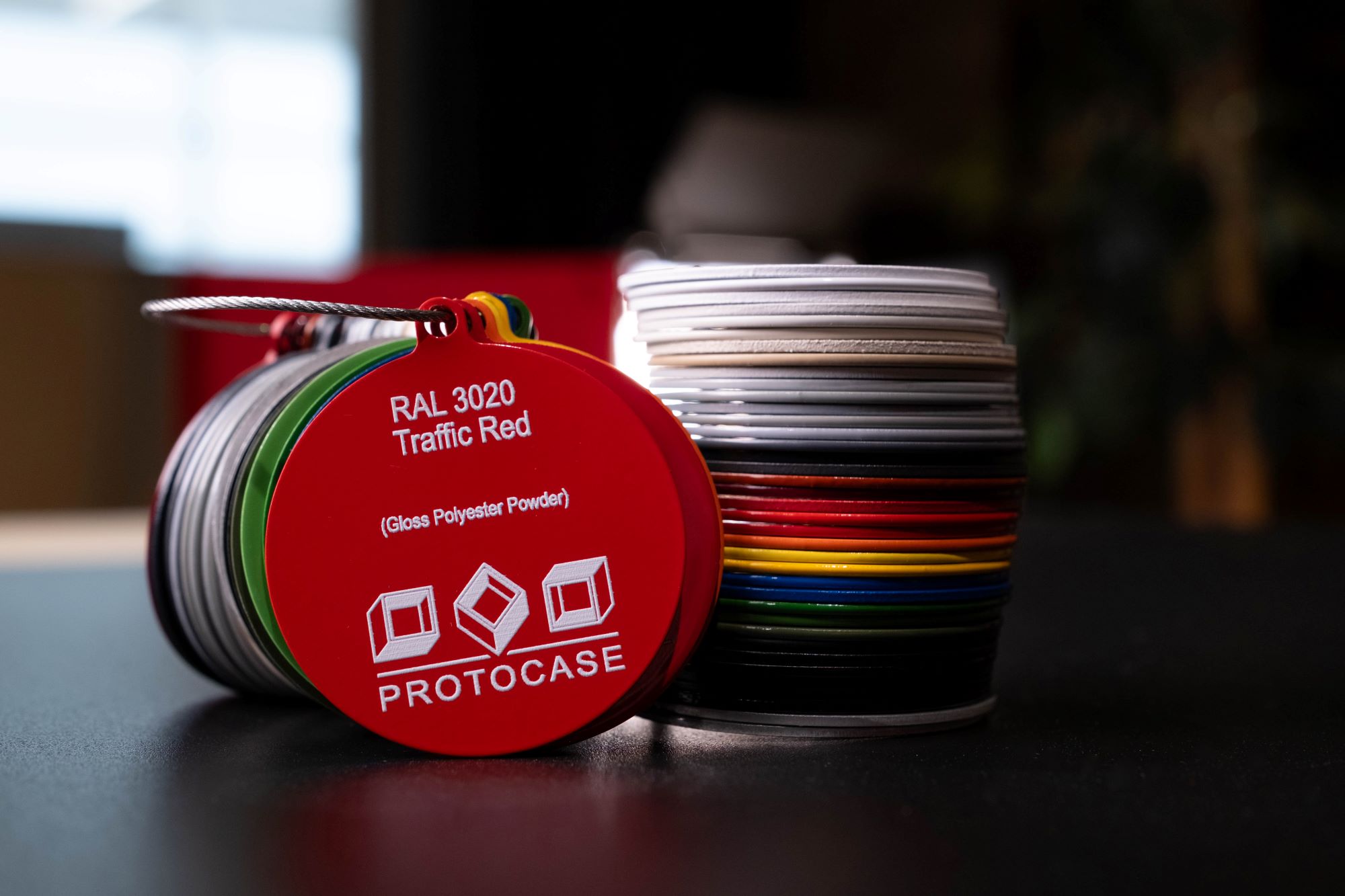
protocase powder coat samples
Want free powder coat samples? Click here!

Material Compatibility & Thickness

First, let’s discuss material compatibility. As powder coating is applied electrostatically, it can only be applied to metals and not plastics. Meanwhile, among our in-stock material, anodizing can be applied only on aluminum.

Powder coating creates a thick, resilient barrier that excels at protecting against impact damage and extreme weather conditions. The finish can withstand significant wear and tear, making it ideal for outdoor applications and heavy-duty equipment.

Anodizing produces a thinner but incredibly hard surface that’s highly resistant to corrosion and abrasion. While the anodized layer is more brittle than powder coating, it offers excellent protection against environmental factors and maintains its appearance longer.

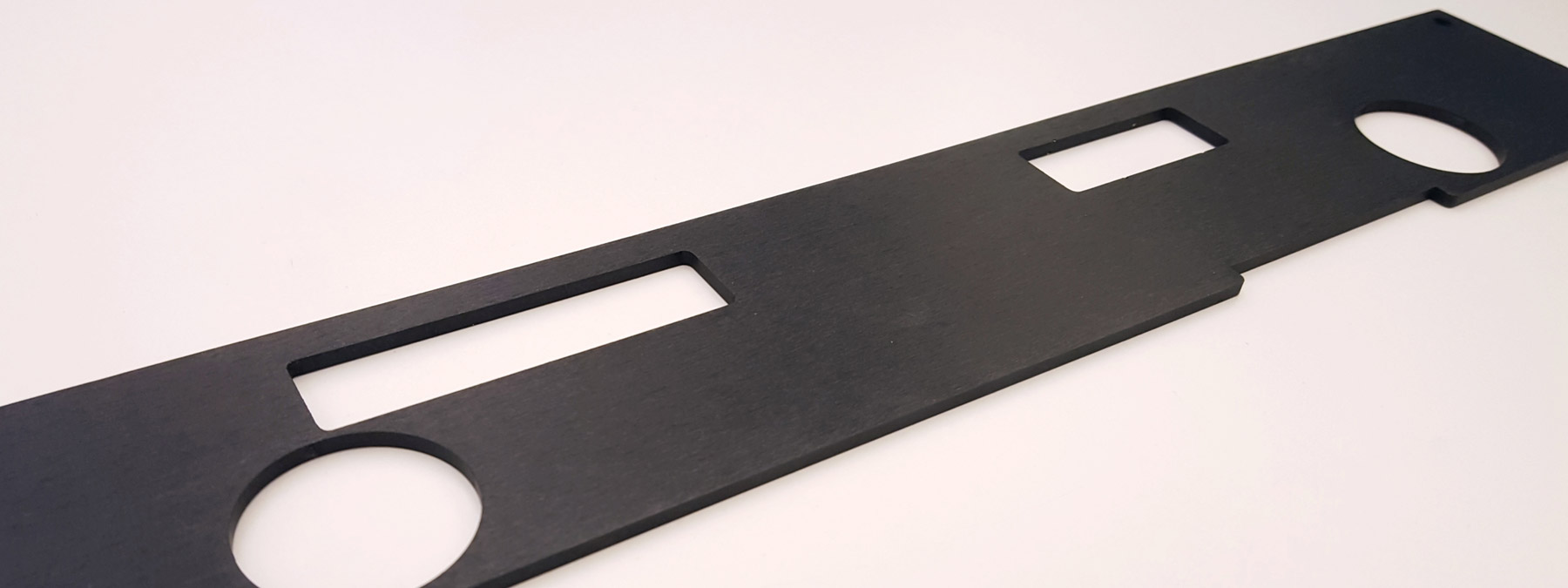
anodized aluminum part with black tint
Anodized Aluminum Part – Black Tint

Color Options & Appearance

Powder coating offers a significantly wider range of color options compared to anodizing. We currently provide an impressive selection of 36 powder coating colors in-house. And if you’re looking for a specific color outside of those choices, we’re happy to source non-stock options to meet your exact requirements.

In contrast, we offer seven color choices for Type II anodizing and two for Type III anodizing.

With powder coating, you can achieve matte, gloss, textured, or metallic appearances. The thick coating can also hide surface imperfections and create a uniform look across different materials.

Anodized finishes, meanwhile, maintain the metal’s natural texture and appearance while providing a clean and professional look.

Tolerances

As mentioned earlier, anodizing results in a much thinner coating compared to powder coating. Type II anodizing adds just 0.0004″ (0.01mm) to the surface, while Type III adds 0.001″ (0.03mm).

In contrast, powder coating adds a significantly thicker layer of 0.003″ (0.08mm). Keep these tolerances in mind when applying a finish to your design.

Cost & Lead Times

If budget is your primary concern, powder coating is the more cost-effective option due to its straightforward process. However, if corrosion resistance and durability are very important for your project, anodizing may prove to be an economical choice in the long run.

When it comes to lead times, we can manufacture your fully finished part with powder coating added in just 2-3 days. However, anodizing requires extra lead time as it is done via a trusted third-party supplier.

Summary

Powder coating is the ideal choice if you need maximum impact resistance, more color options, a cost-effective finishing method for different materials.

On the other hand, anodizing is the better option when working with aluminum and needing superior corrosion resistance, maintaining precise dimensions, a professional appearance that highlights the metal’s texture, or long-term durability in outdoor applications.

While powder coating is a solid choice for harsh environments because it’s cost-effective and will protect the metal from rusting, if there is concern of debris causing chipping, anodize is a better option as it will protect against corrosion as well as debris chipping.

The HVMC Advantage

At Protocase, we leverage High-Velocity Mass Customization (HVMC) to serve as your one-stop shop for fully finished sheet metal and machined parts. Whether it’s adding precise cutouts or applying custom graphics, we handle it all. Best of all, we can manufacture fully finished custom parts in as fast as 2-3 days.

If you have a design ready, get an instant quote now!

Newsletter Signup

Sign up to be the first to know about new blog posts and other technical resources

Stay Updated

Subscribe to our newsletter
to get our latest news.

Social Links

Terms & Conditions

© Protocase 2022 - All rights reserved.