Your design may require you to leverage the unique properties of 3D printed parts and enclosures on their own or as part of a full assembly.
In this blog, we will discuss the basics of 3D Printing and also go through the specifics of high temperature 3D printing for those projects that require using advanced thermoplastics.
Before diving into High Temperature 3D Printing, it’s important to first revisit the fundamentals of 3D Printing. After all, a solid understanding of the basics is going to be very important.
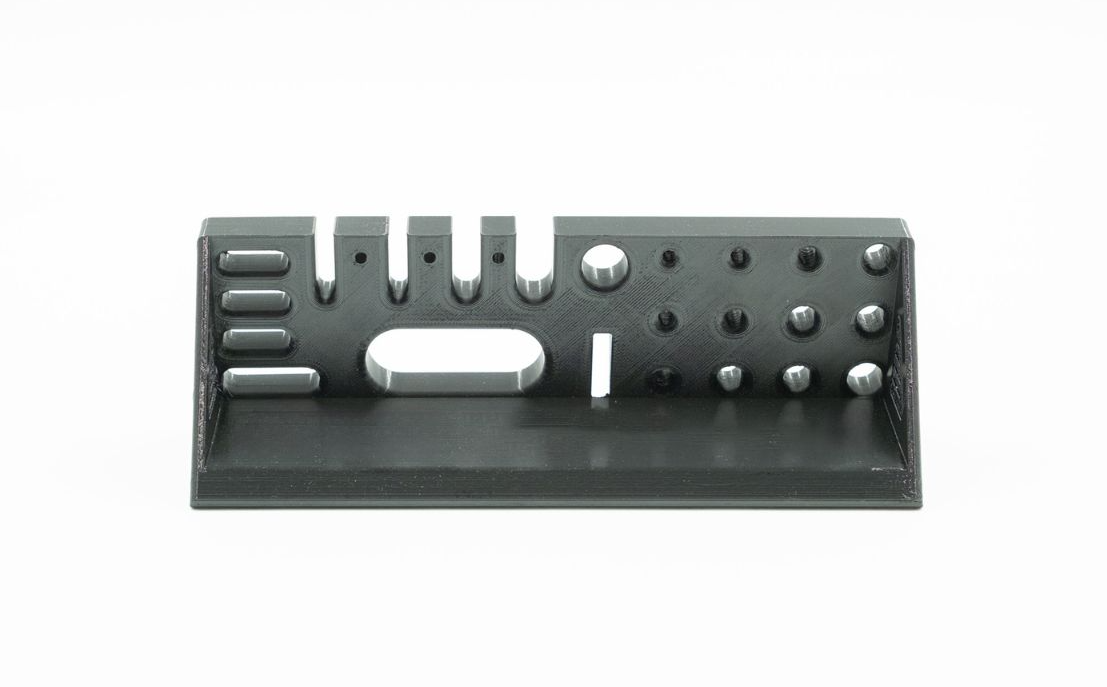
Protocase’s 3D printing uses fused deposition modelling (FDM), which involves heating the filament and then depositing it by an extrusion head onto a build platform where it cools off.
Unlike our sheet metal and CNC milling processes, 3D printing is additive. Plastic is added to the design layer by layer to allow rapid creation of prototype plastic parts and end-use products.
3D printing is incredibly useful for rapid prototyping and product development. When you work with us, we can 3D print parts in as fast as 2-3 days.

With high temperature 3D printing, we are now able to print filaments that require up to 500 degrees. This can handle advanced thermoplastics, such as PEI, PEEK and PEKK which are known for their exceptional strength, heat resistance and durability.
High temperature 3D printing is especially valuable in industries like aerospace, automotive, and medical. In these fields, components must withstand extreme conditions while maintaining structural integrity.
The technology also enables rapid iteration cycles. You can print complex parts in a fraction of the time it would take to mill them. This allows you to test multiple iterations quickly and refine designs based on real-world performance data.
This aligns with what we like to call High Velocity Mass Customization (HVMC). By leveraging HVMC, we manufacture fully finished, custom parts in super-fast time, enabling you to accelerate product testing and experimental development. And 3D printing is perfect for that!
High temperature 3D printing also has other benefits such as allowing complex geometries without compromises. The elevated printing temperatures enable better layer adhesion and reduced warping, allowing you to push geometric boundaries.
It also reduces the need for fasteners or welds.
Do note that the work envelope for our high temperature 3D printing defers from our standard 3D printing services. While the work envelope for standard 3D printing is 14.17″ x 14.17″ x 14.17″ (360mm x 360mm x 360mm), for high temperature 3D printing, it is 11.81″ x 11.81″ x 15.75″ (300mm x 300mm x 400mm).
Standard printing uses a square bed, while high-temperature printing will be done in a circular workspace. The bed in this case is 300mm in diameter and can print up to 400mm in the Z direction.
If you have questions about our 3D printing capabilities, contact us and your account manager will be ready to help.
Newsletter Signup
Sign up to be the first to know about new blog posts and other technical resources
Stay Updated
Subscribe to our newsletter
to get our latest news.
Proudly Certified
© Protocase 2022 - All rights reserved.